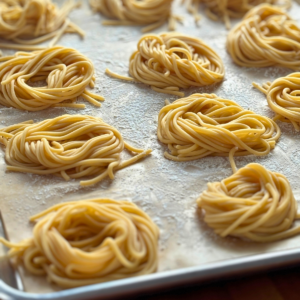
Homemade Egg Pasta Recipe (3 Easy Ways to Make It From Scratch)

This homemade egg pasta recipe uses just flour, eggs, and salt to create tender, fresh pasta from scratch. Includes three easy dough methods—food processor, stand mixer, or by hand—plus simple tips for rolling, cooking, and storing your pasta with confidence. Perfect for beginners and from-scratch kitchens.
Equipment
- Food processor (optional)
- Stand mixer with dough hook (optional)
- Rolling Pin
- Pasta machine (optional)
- sharp knife
- Freezer bags
Ingredients
- 2 cups all purpose flour
- ½ tsp salt
- 3 whole eggs
- 1 egg yolk if needed
- water if needed
Instructions
How to Make the Dough (3 Simple Methods)
Food Processor Method
- Add flour and salt to processor.
- Add eggs and pulse until dough forms.
- If dry, add 1 yolk.
- Still dry? Add 1 teaspoon water at a time.
- Knead by hand 3–4 minutes.
- Let the dough rest for 30–45 minutes in a sealed bag, or covered with plastic wrap.
Stand Mixer Method
- Add flour and salt to bowl.
- Attach dough hook.
- Add eggs and mix on low.
- Knead 4–5 minutes until smooth.
- Rest fresh pasta dough for 30–45 minutes in a sealed plastic bag, or covered with plastic wrap.
Traditional Well Method (By Hand)
- This is where old-world charm shines.
- Pour flour onto a clean work surface.
- Mix in salt.
- Create a well of flour in the center.
- Crack eggs into the well.
- Use a fork to whisk eggs, slowly incorporating flour. The use of a dough scraper can be useful at this stage.
- Once shaggy, knead 8–10 minutes until smooth.
- Rest fresh pasta dough for 30–45 minutes in a sealed bag, or covered with plastic wrap. If eggs spill out, just sweep flour back over them and keep going.
Rolling the Dough (With or Without a Machine)
- After resting, divide dough into 4 pieces. Keep unused portions covered. Once the dough is rolled and cut, place on a drying rack or place of clean floured dish towels.
Using a Hand-Cranked Pasta Machine
- Flatten dough slightly.
- Start at widest setting.
- Feed through, fold into thirds, repeat 2–3 times.
- Reduce thickness gradually.
- For fettuccine, stop around medium-thin (#5–6 on most machines).
- Practical Tip: Lightly flour between passes.
Using a Pasta Roller Attachment
- A mixer attachment like the KitchenAid roller ensures consistent sheets.
- Start at widest setting.
- Feed a piece of dough through on low speed.
- Fold, dust with a little flour and repeat.
- Gradually reduce thickness.
- Homestead Pro Tip: Using the Gourmet Pasta Press Kitchenaid attachment; allows you to easily make 6 different kind of pasta, such as
Rolling Pasta Completely by Hand (No Machine Needed)
- No roller? No problem.
- On a lightly floured surface, flatten the dough into a disk.
- Use a rolling pin to roll outward from the center.
- Rotate the dough 90 degrees frequently to maintain shape.
- Continue rolling until very thin—you should see light through it.
- For fettuccine:
- Lightly flour the sheet.
- Roll loosely into a log.
- Cut pasta into strips with a sharp knife.
- Unroll gently.
- Rolling by hand is a basic technique, but it takes patience, and it works beautifully.
- Pro Tip: Roll into a sheet of pasta and use as lasagna noodles
How to Cook Fresh Pasta
- Fresh pasta cooks much faster than dried.
- Bring a large pot of salted water to a rolling boil.
- Add pasta.
- Stir gently.
- Cook al dente 2–4 minutes (depending on thickness).
- Taste to check doneness.
- It should be tender with a slight bite.
- According to culinary studies, fresh pasta absorbs sauce more effectively due to its porous texture.
How to Cook Frozen Pasta
- Do not thaw.
- Bring large pot of water to a boil. We like to salt our water when cooking pasta.
- Add frozen pasta directly to pot.
- Cook 3–5 minutes.
- Frozen pasta may need 1 extra minute.
- Freezing preserves texture better than refrigeration for longer storage.
Troubleshooting: When Dough Gets Difficult
Too Dry
- Add 1 egg yolk first.
- Then 1 teaspoon water at a time.
Too Sticky
- Add flour gradually.
- Tough Pasta
- Possibly overworked or too thick.
Tearing While Rolling
- Not rested long enough.
Factors That Affect Dough
- Humidity
- Egg size
- Flour protein content
- Over-kneading
- Rest time
- Even small changes matter.
- Practical Tip: Adjust slowly—tiny changes make a big difference.
Making Pasta in Bulk (And Freezing It)
- I often make 4–6 batches—but knead each batch separately. Too much dough at once becomes unmanageable.
- To freeze:
- Shape pasta.
- Dust lightly with flour.
- Lay in single layers on a baking sheet.
- Freeze until solid.
- Transfer to freezer bags.
- Frozen pasta lasts up to 3 months.
- Cook directly from frozen.
Notes
Special Tools (affiliate links): Pasta Maker Machine | Pasta Attachment for KitchenAid | KitchenAid Gourmet Pasta Press Attachment | Pasta Drying Rack |
Tried this recipe?Let us know how it was!
